
Buying cat litter should be simple. Yet for many cat parents, finding the right option often means choosing between cost, performance, and peace of mind.
Low-cost litter is usually dusty and offers poor odor control. Eco-friendly options sound appealing, but they’re often expensive and don’t always perform as promised. Premium litters may work well, but they can come with high price tags — and ingredients that aren’t always ideal for cats or the people who live with them.
Those tradeoffs are becoming harder to ignore. As the cost of living continues to rise and consumers become more selective about everyday household purchases, cat owners are taking a closer look at what they pour into the litter box. That shift is driving renewed interest in alternatives that balance affordability, performance, and sustainability — like Catalyst Pet, a wood-based cat litter gaining attention among pet parents.
Why choosing the right cat litter matters
The litter box is one of the most used — and most overlooked — parts of cat care. The litter inside doesn’t just affect cleanup. It can influence air quality and odor in the home, paw comfort, and even litter box habits.
“Premium, sustainable pet products often force pet owners to compromise,” says Jim Gallman, vice president of marketing at Catalyst Pet. “Catalyst was designed to challenge that expectation.”
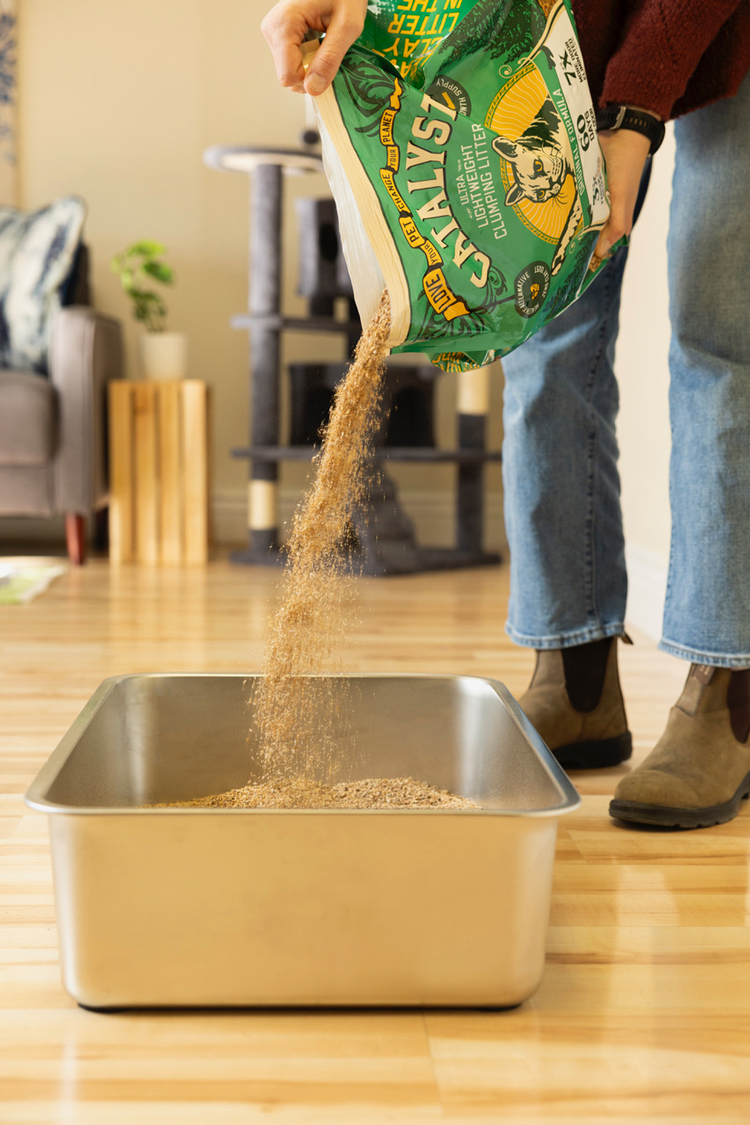
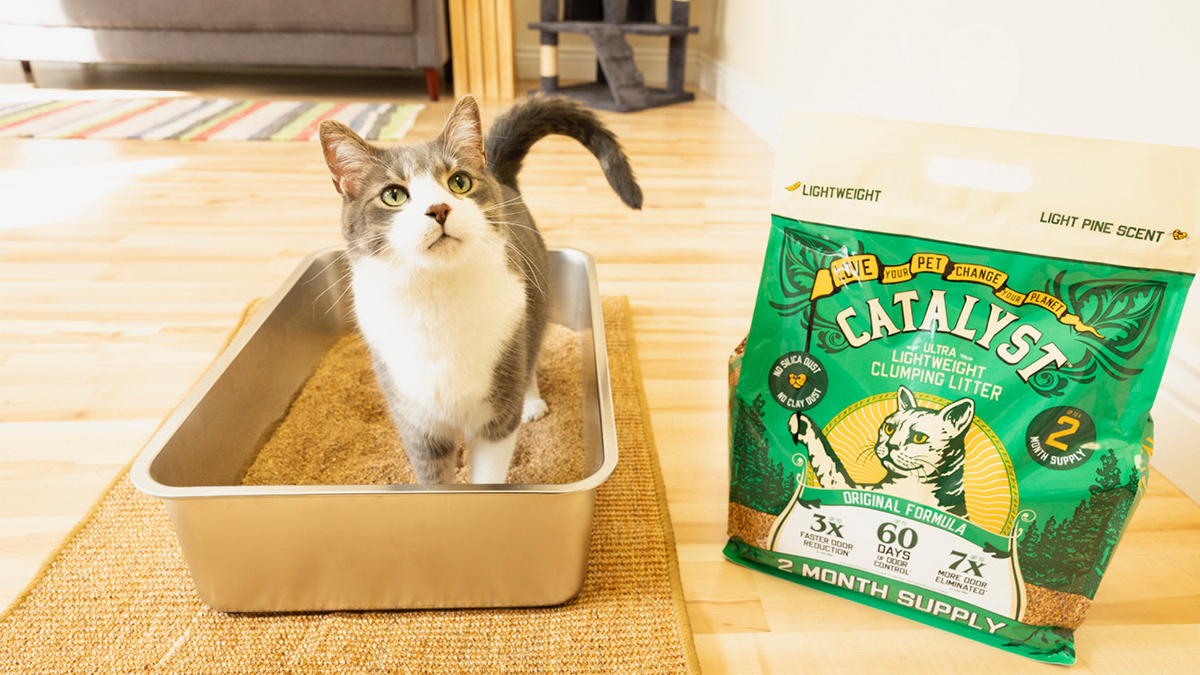
Made from upcycled soft wood, Catalyst is an all-natural clumping cat litter that absorbs moisture quickly, controls odors effectively, and produces minimal dust — without relying on heavy fragrances or harsh additives.
Clay, crystal, and wood cat litter: Pros and cons explained
Not all cat litter types perform the same, and understanding the differences can help explain why many pet owners are reconsidering traditional options.
Clay cat litter remains common because it’s familiar and inexpensive. However, it’s strip-mined, which damages ecosystems and produces dust that can irritate lungs. Clay can be heavy, is non-biodegradable, and often needs frequent replacement.
Silica or crystal cat litter offers strong odor control and lower dust, and some varieties include moisture-monitoring benefits. But silica is energy-intensive to produce, often imported, and typically more expensive. Some cats also find the texture uncomfortable.
Wood-based cat litter, like Catalyst, offers a more sustainable, high-performance alternative. Catalyst uses leftover soft wood that would otherwise end up in landfills. Wood’s naturally porous structure absorbs moisture efficiently and traps odors — without synthetic fragrances or chemical additives.
“Wood acts like a sponge,” Gallman explains. “It absorbs moisture quickly and naturally controls odor, so you end up using less litter overall.”
Better for cats — and the people who care for them
Performance matters, but comfort and safety matter too.
Chicago-based emergency veterinarian Dr. Frank Bozelka says low-dust, soft-textured litter can make a noticeable difference, especially for cats with sensitive paws.

Dr. Frank Bozelka
Chicago-Based Emergency Veterenarian
“When litter is comfortable and easy to use, cats are more likely to accept it,” Bozelka says. “That can help reduce issues like avoiding the litter box.”
Unlike clay or silica, wood-based Catalyst won’t expand dangerously if ingested, and its low-dust formula helps keep indoor air cleaner for both cats and their owners.
The real cost of cat litter
The price on the bag doesn’t tell the full story. The longevity and efficiency of a cat litter play a major role in overall cost.
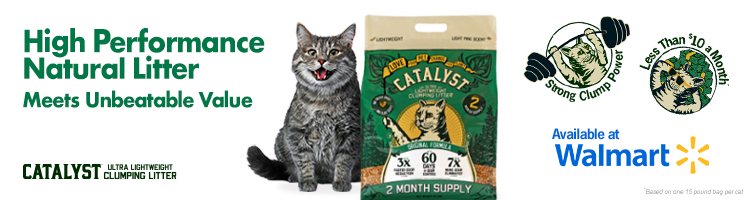
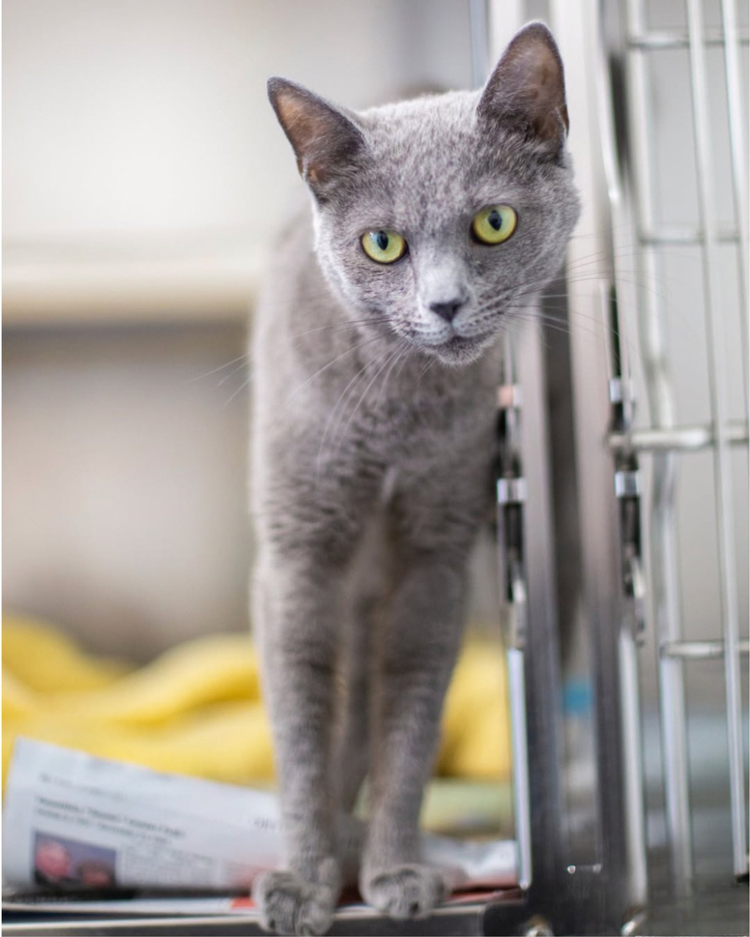
Thanks to its absorbency, one pound of Catalyst replaces up to four pounds of traditional clay litter, meaning fewer refills, fewer trips to the store, and less time spent scooping.
For many households, that efficiency translates to spending less than $10 per cat per month, making Catalyst competitive with clay litter and often more affordable over time than many natural or crystal alternatives.
Designed with the planet in mind
Catalyst’s sustainability starts at the source. Using upcycled wood reduces landfill waste and avoids the environmental impact associated with mining. Its lightweight composition also helps lower transportation emissions.
“Catalyst is eco-friendly, clumps naturally, controls odors, and minimizes waste,” Gallman says. “It’s designed to work for cats, owners, and the planet.”
Making the switch: Tips for a smooth transition
Even the best cat litter won’t work if your cat refuses it. Experts recommend gradually mixing new litter with the old over several days, keeping the box clean, and maintaining familiar placement.
“Cats are creatures of habit,” Dr. Bozelka notes. “A slow transition helps them adjust and prevents litter box issues.”
With the right approach, switching litter can be simple — and stress-free for both cats and their owners.
A better option for modern cat parents
Choosing cat litter shouldn’t mean choosing between affordability, performance, and responsibility. Catalyst was created for cat parents who want all three — without compromise.
Catalyst’s wood-based, high-performing low-dust cat litter is available in store and online at Walmart, at CatalystPet.com, and through other retailers nationwide.
To learn more, visit catalystpet.com
