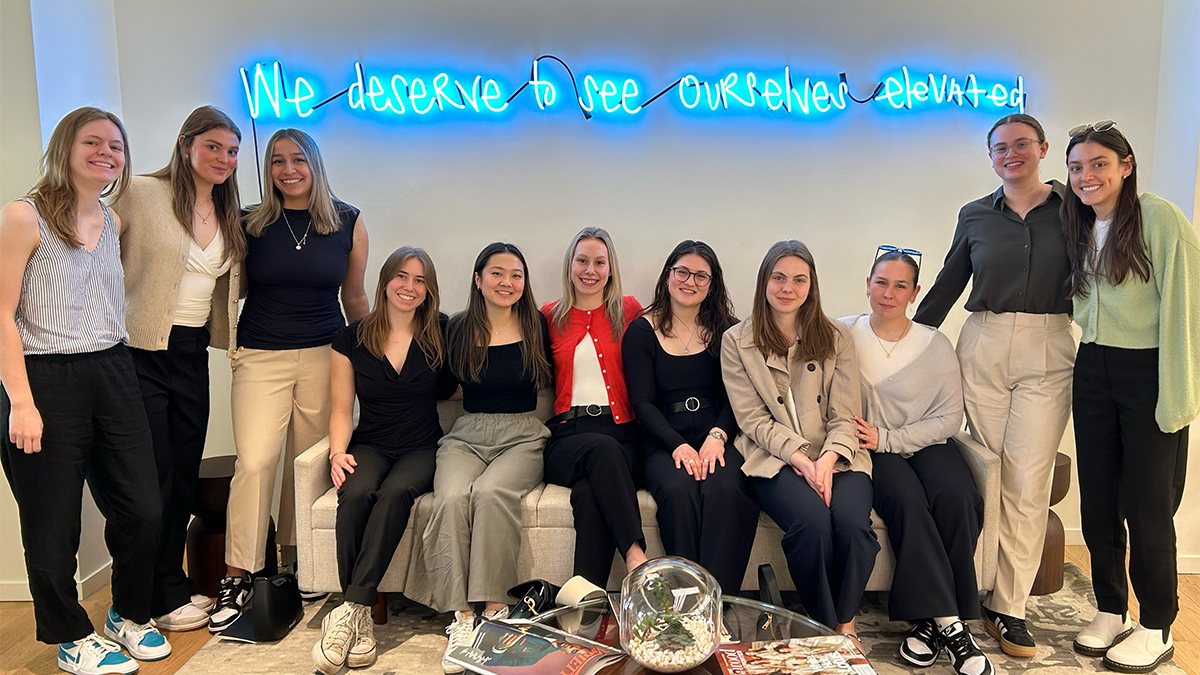


At Syracuse University’s Falk College of Sport, students are encouraged to understand sport as a powerful social and cultural space, including its ability to expand opportunity for girls and women.

Lindsey Darvin, Ph.D.
Assistant Professor in the Department of Sport Management, David B. Falk College of Sport at Syracuse University
Recently, the growth of the women’s sports industry has been on full display. Professional leagues are breaking viewership records, women college athletes are building valuable personal brands through name, image, and likeness (NIL) opportunities, and girls are seeing more examples of women leading, competing, and succeeding across the industry.
Importantly, this growth did not occur overnight, and it certainly was not at random. The current status of the industry is the direct result of years of steady investment, intentional leadership, and a belief in the value of women’s sports as a valuable business segment.
As students study the sport industry during their time at Falk College of Sport, they are taught to look closely at these patterns and understand how decisions made by leagues, media organizations, and institutions shape who is seen, who is supported, and who feels welcome in sport spaces.
“Celebrating the wins across the sports industry can be centered around objective and tangible growth patterns,” said Jeremy S. Jordan, Ph.D., professor and dean at the Falk College of Sport. “This growth across women’s sports is often best reflected in recent attendance and viewership data, with women’s basketball leading the way.”

During the 2025 season, the WNBA drew more than 3 million fans into arenas across the league, averaging nearly 11,000 spectators per game. This interest extended beyond the arena, as national broadcasts on ESPN networks averaged approximately 1.3 million viewers per regular-season game.
A similar pattern of growth is currently unfolding in women’s professional hockey. As of January, the Professional Women’s Hockey League surpassed 527,000 total fans through the first 61 games of the 2025–26 season. That momentum was especially clear in January, when the league set a new record with an average of 9,087 fans per game across 28 contests.
At the collegiate level, women athletes are experiencing similar rates of momentum as they continue to navigate a new industry landscape that is now shaped by NIL opportunities. Early expectations suggested that NIL would favor men’s revenue sports, yet women athletes quickly emerged as leaders in this space with strong personal brands and fan engagement.
As women’s sports continue to grow across professional leagues, collegiate athletics, and emerging spaces, education plays an important role in shaping what comes next. Programs housed within the Falk College of Sport help equip students with the tools needed to succeed in these evolving environments. By studying women’s sports through research, data, media strategy, organizational and leadership development, as well as policy and theoretical application, students gain a much deeper understanding of how sport organizations grow audiences in addition to how the industry influences our broader culture.
Education in women’s sport will continue to play an important role in preparing the next generation of leaders so that we may sustain this momentum.
