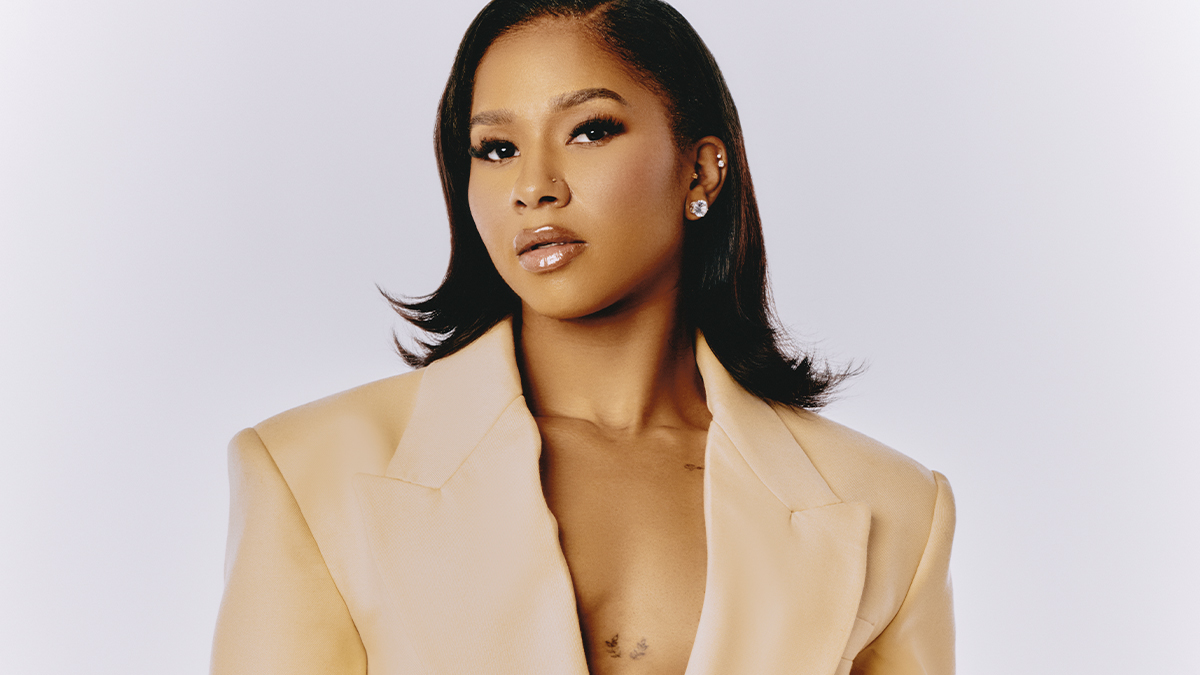
Professional gymnast Jordan Chiles knows a thing or two about performing under pressure, and the two-time medal-winning Olympian wants other athletes to know that when it comes to managing it, mental health shouldn’t take a backseat to physical health.
But that balance between physical and mental health didn’t always exist for Chiles.
“Early in my career, I thought that being strong meant pushing through everything and keeping my feelings to myself,” said Chiles, 24. “I was conditioned to believe that if I was struggling, it meant that I was not tough enough. Over time, and through real experiences, both good and painful, I learned that listening to my mind is just as important as listening to my body.”
An evolved approach
Mental health, Chiles said, requires commitment. “Mental health is not something you fix once and move on from; it is something you check in with constantly. Now, I see taking care of my mental health as part of my responsibility to myself as an athlete and as a woman. It helps me compete better, but more importantly, it helps me live better and stay connected to who I am beyond the sport.”
Chiles goes to therapy, which has been “huge” for her because “it gives me the time to be honest without judgment.” She added, “Having support that allows you to rest, to speak up, and to be vulnerable is just as important as having support that pushes you to be great and hold yourself to a high standard.”
At the same time, for Chiles, mental healthcare includes leaning on her support system: her friends, her family, her coach — all people who “keep me grounded and remind me who I am when the noise gets loud.”
And when she feels that pressure, which is inevitable when you’re competing at the level Chiles is, she focuses on what she can control. “My breathing, my preparation, and my trust in the work I have already put in,” Chiles said. “When I salute the judges, I remind myself that this is still something I love. I am not here to be perfect; I am here to be present and to compete with confidence in who I am and how hard I have trained.”
A worthy spotlight
As women’s sports have become more popular, so have female athletes — and their hard work and devotion. That fact has opened the door to more conversations with female athletes about the importance of mental health, Chiles said.
“People are finally starting to see the full picture — not just the fake limits and assumptions,” she said. “They are seeing the work, the pressure, the sacrifices, and the emotional weight that comes with competing at a high level.”
Chiles wants these conversations to help people realize that athletes are real people, not “machines.” “We are humans first, with real emotions, real fears, and real lives outside of competition,” she added. “In women’s sports especially, I want mental health to be seen as part of strength, not a weakness.”
As for other young women who love sports but are hesitant to take the leap, consider Chiles’ advice to listen to — and trust — yourself. “Trust your voice, ask questions, take up space, and do not wait for permission to dream bigger,” she said. “Your love for sports can turn into leadership, advocacy, creativity, or change, and all of that matters just as much as what happens on the floor or the field.”
