

Our panel of experts — BJ Bertges, Brooke Pryor, and Danette Leighton — all game-changers in sports management and leadership, discuss representation and the continued need to break barriers for women in sports.
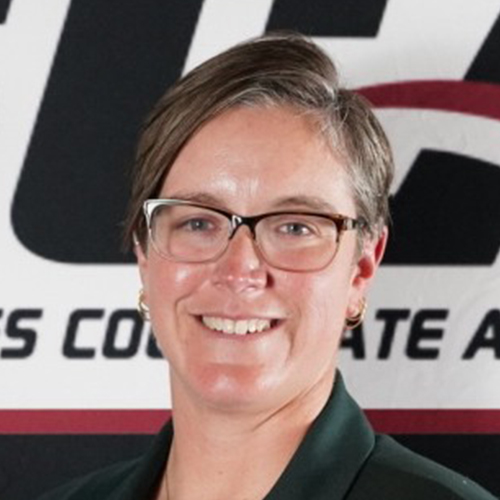
BJ Bertges
CEO, United States Collegiate Athletic Association (USCAA)

Brooke Pryor
Member, Board of Directors, National Sports Media Association (NSMA); NFL and Pittsburgh Steelers Reporter, ESPN
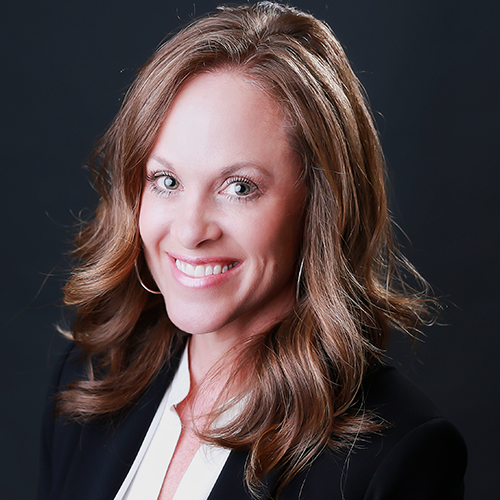
Danette Leighton
CEO, Women’s Sports Foundation
What do you think is the biggest barrier for women working within the sports industry today?
BJ Bertges: I think one of the biggest barriers is simply expanding pathways into leadership and decision-making roles. We’ve seen real progress, but there’s still room to create more opportunities for women to grow, lead, and influence the direction of the industry. The more diverse perspectives we have at the table, the stronger the industry becomes. It’s less about barriers alone and more about continuing to open doors and build clear pipelines for advancement.
Brooke Pryor: Being able to overcome implicit — and sometimes explicit — bias. Though women have been working in sports for decades, I still deal with people assuming I’m in these spaces because I’m a wife, a girlfriend, a sister, or a mother of an athlete. Other times, women deal with people assuming they’re only working in sports to meet their future partners. Those things can make it feel impossible to be taken seriously or feel like you’re getting a fair shot to do the job. But it’s important to know that you belong, even if others question your place.
Danette Leighton: Every decade, we see more women leading in sports, whether on the business side or in performance roles like coaching. But we still see massive opportunity gaps that closely mirror those in girls’ and women’s participation and coaching. That is significant because sport is one of the most transformative tools we have to build strong leaders across every sector of our economy, including the sports industry itself.
One of the biggest barriers is the gap between proven value and actual investment, similar to the broader lack of investment in women’s sports. When investment is treated as optional rather than standard business practice, it limits opportunities for women across the industry, from athletes to executives. The encouraging shift is that more organizations are beginning to recognize that investing in women’s sports, and building on decades of progress sparked by Title IX, is helping normalize women in leadership throughout the industry.
What is advice you would give to young girls and women who are looking to enter this industry?
BB: Believe that you belong in this space, because you do. Be proactive about building relationships, asking questions, and gaining as much experience as possible. The sports industry is built on passion and work ethic, so stay curious, consistent and disciplined. Find mentors who will support you, and remember that your perspective and leadership style are strengths.
BP: Keep showing up — even when it’s tough, even when you don’t want to. You can’t control everyone else, but you can control how you respond and how you do your job. The best thing you can do is take every opportunity to show up to do your job, and you never know what doors will open just because you were there in that moment.
DL: I was fortunate to spend 30 years on the business side of sports representing both men’s and women’s sports, and I loved every minute. My advice is to stay grounded in your values and principles. Building a career takes hard work, resilience, and strong relationships. When someone opens a door for you, walk through it with confidence and be sure to hold it open for others. There is plenty of room at the table for strong leaders committed to creating a future of equal opportunity. Always strive to be a role model, because you never know who may be looking to you for inspiration.
In your opinion, what is the state of women representation in sports media today, and where do you see it going in the future?
BB: Women’s representation in sports media has come a long way, and the growth in coverage over the past several years has been exciting to watch. There’s more visibility, stronger storytelling, and greater investment in women’s sports than ever before, especially when it comes to new brands getting involved with new leagues like League One Volleyball (LOVB). That said, the work isn’t finished. We need to keep building on this momentum to ensure consistent coverage and expanded opportunities.
DL: The momentum around women’s sports is undeniable. Audiences are proving what many of us have long known; women athletes deliver competition, excitement, and performance that deserve equal airtime and investment. The growth of women’s sports has created new forms of media coverage that did not exist before, and women athletes have been among the strongest at using their platforms and voices. We are also seeing elite athletes with remarkable accolades enter the media landscape across both men’s and women’s sports, bringing undeniable expertise to the conversation.
We are still just scratching the surface when it comes to representation across the industry. We have made progress, but there is more ahead. Coverage is growing, yet women’s sports still receive only a fraction of media attention and sponsorship compared to men’s. As media leaders continue responding to both the demand and the opportunity, the future points toward greater visibility, investment, and industry-wide growth.
