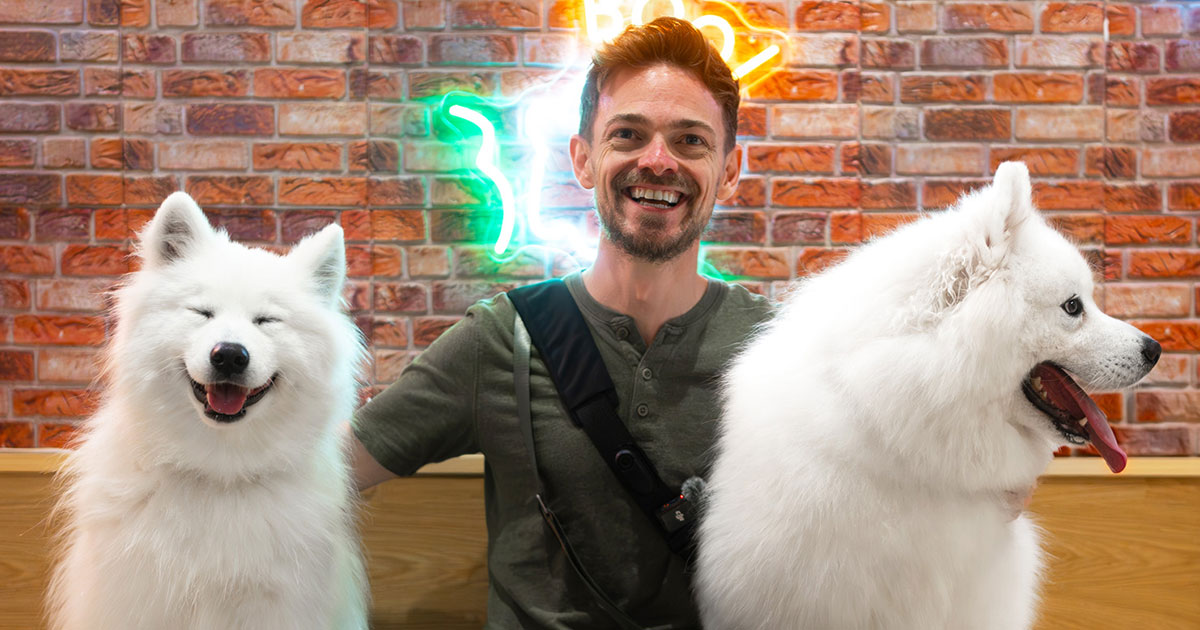
Justin Veenema, a Vancouver-based portrait and dog photographer, shares why he centers his work on the bond between people and their dogs.
What drew you to centering your work in photography primarily around dogs?
It actually started with people. I used to deal with a lot of social anxiety, and photography became this tool for me to connect with the world. I’d approach people on the street, ask to take their portrait, and something about that exchange just lit me up.
However, what I noticed pretty quickly was that when someone had a dog with them, everything changed. The walls came down faster. People opened up. The dog became this bridge between two people who didn’t know each other, and the stories that came out of those moments were some of the most beautiful things I’d ever heard — someone telling me how their rescue dog saved them from depression, or how their senior pup is their best friend. I couldn’t get enough of these stories.
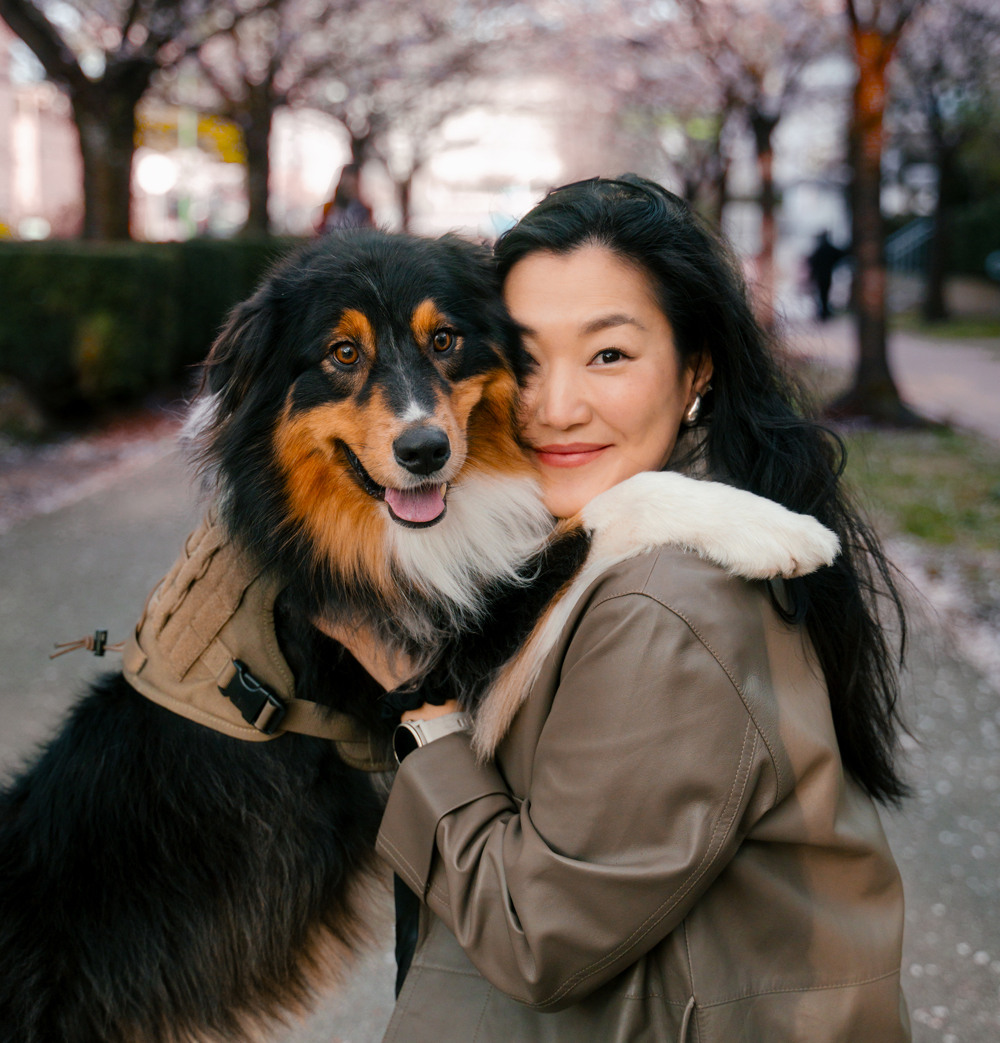
I realized that the bond between humans and their dogs is one of the purest, most universal things in the world. I’ve photographed this bond all over the world, and even with language barriers, I can tell the love is the same.
I want to spend my life documenting that. My own rescue dog, Carter, is a huge part of why I feel so strongly about it, too. He changed my life, and I see that same thing happen with every person I photograph.
What’s your No. 1 tip for capturing a pet’s personality in a photo?
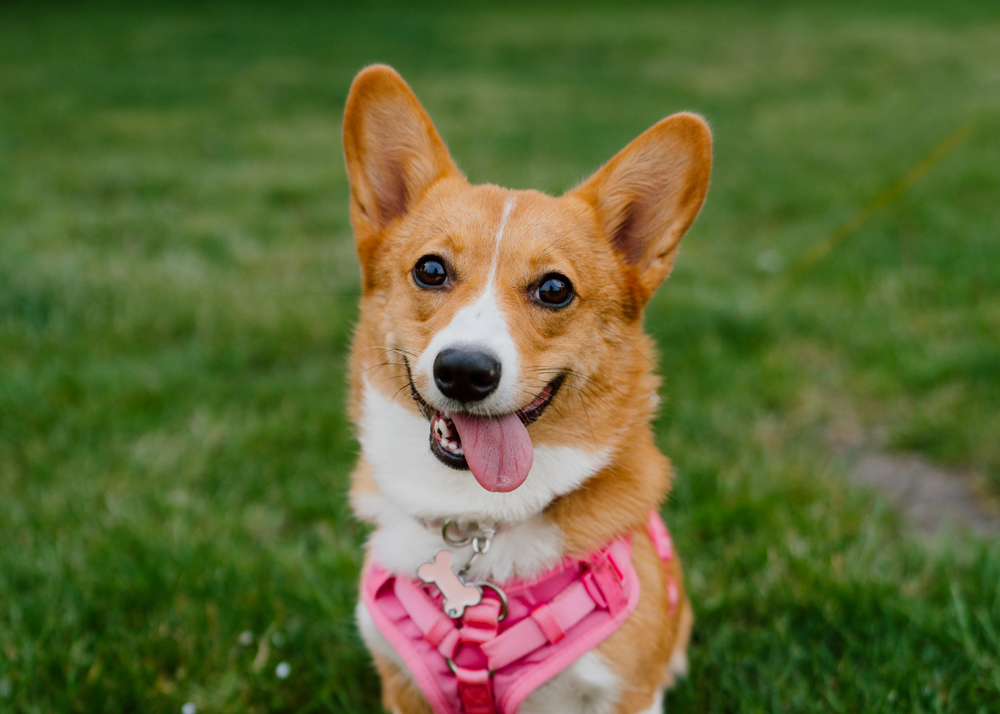
Patience. And treats. But mostly patience. Dogs aren’t going to pose for you on command (Well, some will, but most won’t). The magic happens when you stop trying to force the “perfect” shot and just let them be themselves.
I’ll spend the first few minutes just hanging out with the dog, letting them sniff me, getting comfortable. Then I wait for those little moments of real personality to come through, like the head tilt when they hear a squeaky toy, the goofy smile after they get a treat, the way they lean into their human. Those micro-moments are where the personality lives. You can’t stage that stuff. You just have to be ready for it.
What advice do you have for non-professionals who may be using a smartphone instead of a professional camera?
Honestly, smartphones are incredible now. The camera in your pocket is more than good enough to take a beautiful photo of your dog.
My biggest tip is to get on their level. Like, physically. Get down on the ground. Most people photograph their dog from standing height, looking down, and it makes the dog look small and disconnected. When you crouch down and shoot from their eye level, suddenly you’re in their world. The photo feels more intimate, more personal.
Also, go outside. Natural light is your best friend. Find some open shade, under a tree or next to a building, and let that soft light do the work. You don’t need fancy gear. You need good light, a good angle, and a dog who’s having a good time.
You’ve spoken about the importance of dogs being welcomed into more public spaces. Why do you think that inclusivity matters for both pets and their owners?
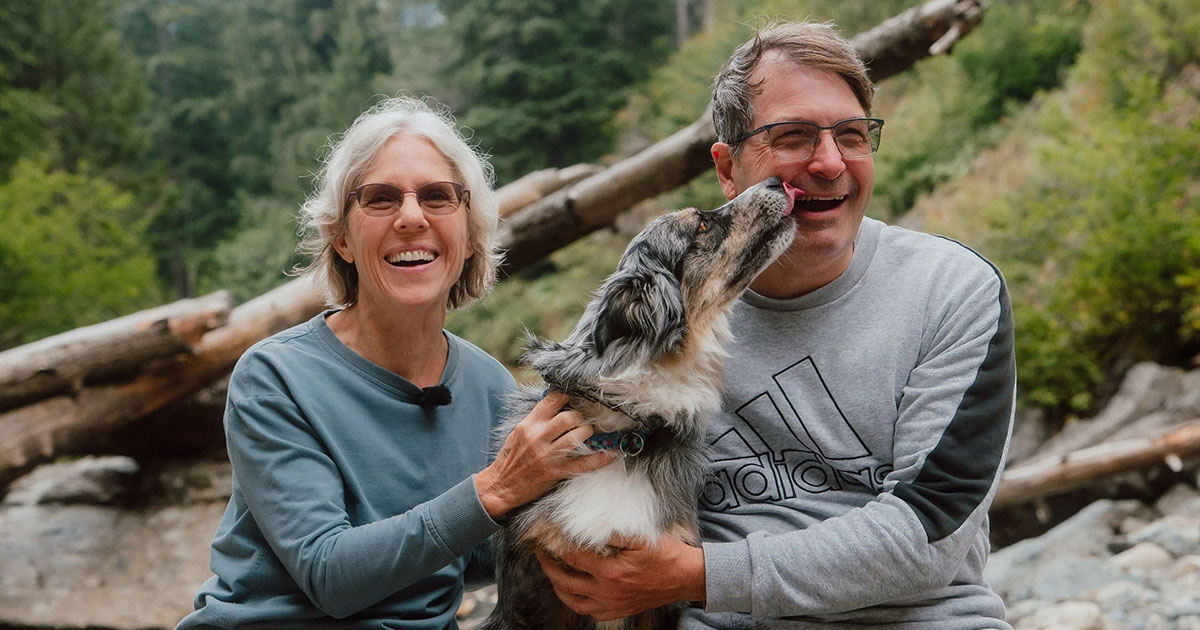
I photograph people on the street every single day, and I can tell you firsthand that dogs make public spaces better. When someone’s walking their dog, they’re more approachable. Research has actually confirmed this.
The mental health side is also real. Dog owners tend to report lower levels of anxiety, depression, and loneliness compared to non-owners. I’m currently working with BC Children’s Hospital to photograph their Pet Therapy program, and I can say without a doubt that dogs being in the hospital make everyone’s lives better. Not just for the sick kids who miss their dogs at home, but for the nurses, surgeons, and staff. They all get excited seeing a golden retriever walking through the halls, and they all get down to pet them.
When a cafe or a shop or a park welcomes dogs, they’re not just being pet-friendly; they’re creating an environment where people actually talk to each other, where stress drops, where the whole vibe shifts. For the owners, their dog is family. Being told your family member isn’t welcome somewhere just feels bad. It limits where you can go, what you can do, and who you can spend time with.
I’ve met so many people who plan their entire day around where their dog is allowed. That shouldn’t be the norm. We should be making more room for them, not less.
What do you love most about working with animals?
They’re honest. That’s the simplest way I can put it. Dogs don’t perform for the camera. They don’t put on a mask or try to impress you. They’re just themselves.
When I’m photographing someone with their dog, the person relaxes too. They stop thinking about how they look and start just being present with their animal. That’s when the best photos happen.
Beyond the photography side of it, I just love hearing the stories. Every single dog I meet has changed someone’s life — every single one — whether it’s the woman who adopted a blind senior dachshund because she wanted to give him a second chance, or the guy whose corgi inspired him to build an entire doggy backpack business so he could bring his dog on the subway.
These animals bring out the best in people, and getting to witness that and share it with the world is the best job I could ask for.
