
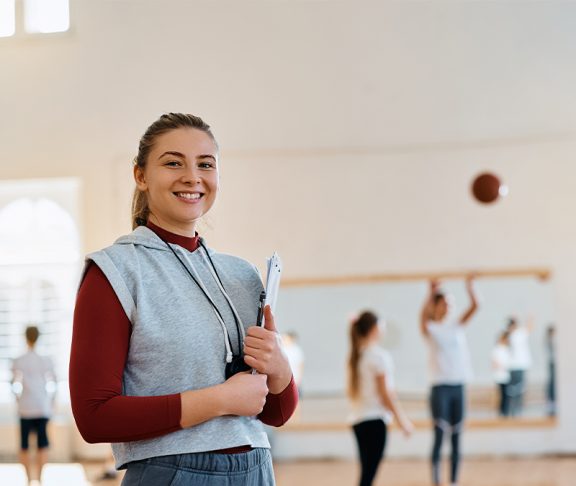
The classroom can be one of the first places young women see themselves represented in the sports industry. Opportunities to close the gender gap extend throughout academic programs and even extracurriculars, giving women the boost they need to be heard.

Dr. Michael Naraine
Associate Professor, Brock University; President, North American Society for Sport Management

Dr. Andrea Geurin
Professor, New York University; Governing Board Member, North American Society for Sport Management
Between 2012 and 2022, the number of women working in the global sport business industry tripled. Despite this progress, women only comprise approximately 20% of positions in the sport industry, according to a report by SportBusiness. The lack of women within sport organizations such as professional leagues and teams, intercollegiate athletics, national sport governing bodies, and international sport federations, is mirrored in many university sport management classrooms throughout North America despite the fact that over 46% of sport management faculty are women.
Those of us who teach these students have numerous examples of female students coming to us asking whether they belong in this industry, sharing feelings of vulnerability in male dominated classrooms, or simply asking about our own experiences navigating this gender gap. These students are often some of the brightest in their cohorts, but the lack of representation they see in the industry and in the classroom can lead to feelings of doubt and impostor syndrome.
Seeing is believing
While gender equity in the sport business field is certainly evolving, such progress has been slow, and university sport management programs are taking necessary steps to accelerate this progress. At the most basic level, professors are increasingly adopting in-class examples from women’s sport and bringing in female guest speakers who are vital players in the global sport industry.
In that spirit, we must recognize and champion the amazing women working in the upper echelons of the industry, especially those who sat in sport management classrooms, like Jess Smith, President of the Golden State Valkyries. As the old adage goes, “If you can see it, you can be it,” and higher education programs are the incubator hubs that can facilitate bridging role models with the next generation, normalizing women as powerful forces within sport business.
Lastly, it is critical that academic programs embrace extracurricular components as a means of closing the gender gap in the sport industry. Amplifying women in the classroom is one step, but academic programs can continue to facilitate pathways for women by maintaining connections outside the classroom. Developing new lines of research that are contextually set in women’s sport and reconnecting with alumni to offer experiential learning to current students are also key value adds that can accelerate the shift toward a gender equitable sport business industry.
